Important medical notice: this article is for information only and does not replace an assessment by your gynaecologist, midwife or rehabilitation doctor. Before starting Pilates or any exercise programme after giving birth, you need medical clearance. This is especially relevant if you have had a caesarean, an assisted delivery, an extensive episiotomy, complications during pregnancy or birth, or any condition that requires specific follow-up. Every recovery is different, and what works for one woman may not be right for another.
You have spent nine months creating life. Your body has adapted, stretched, transformed. Now that your baby is here, you feel your body is not quite your own any more. The abdominal area is soft and disconnected. The pelvic floor does not respond as it used to. Your back complains every time you pick up the baby or lift them out of the cot. And between the lack of sleep, the feeds and the new rhythm of life, finding time and energy for yourself seems like mission impossible.
You are not alone. And you do not have to resign yourself to feeling this way.
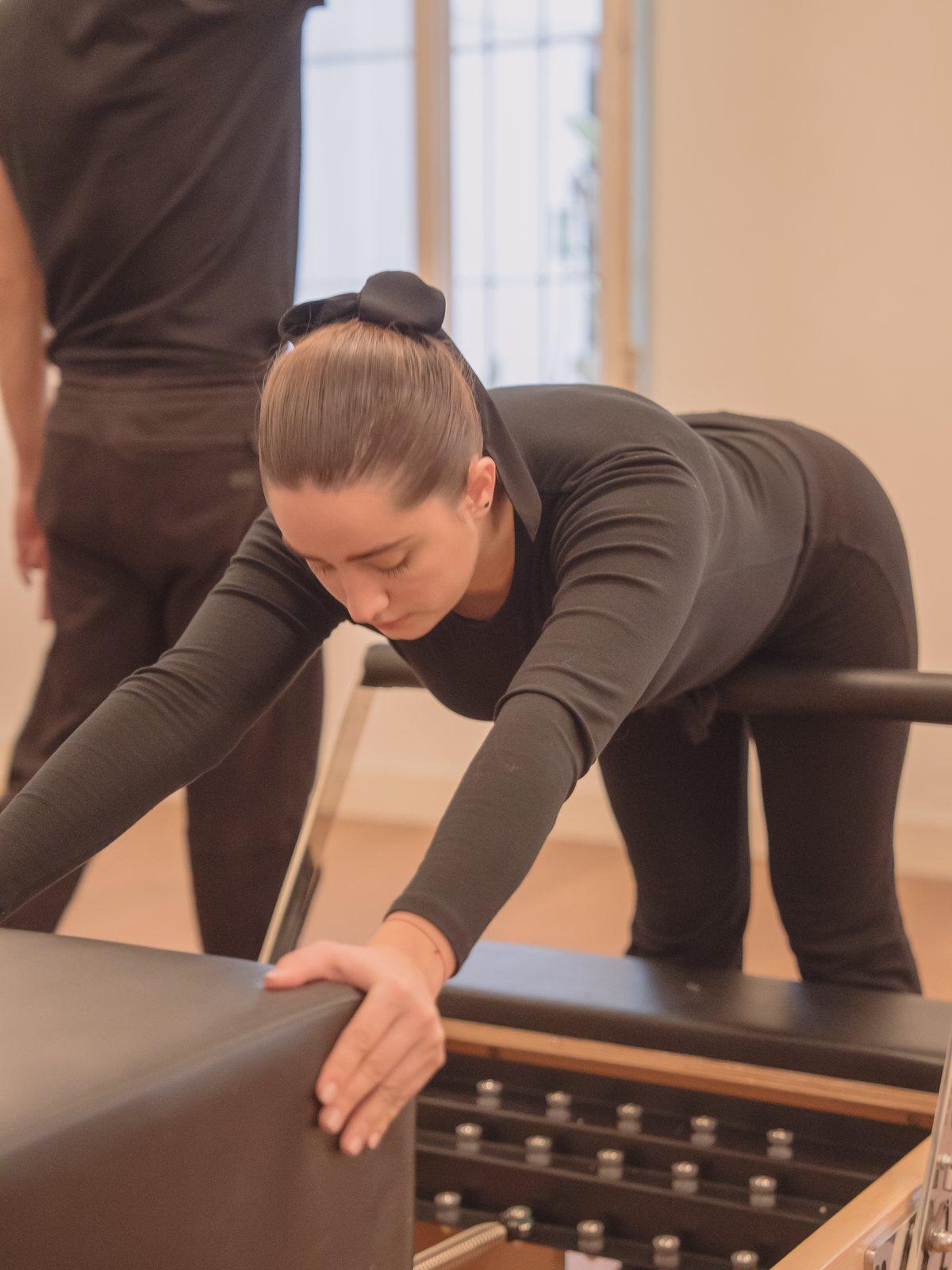
Reformer Pilates is one of the most effective and safest tools for postnatal recovery. It lets you work the deep muscles (core, pelvic floor, spinal stabilisers) without impact, with adaptable resistance and in positions that protect the most vulnerable areas after birth.
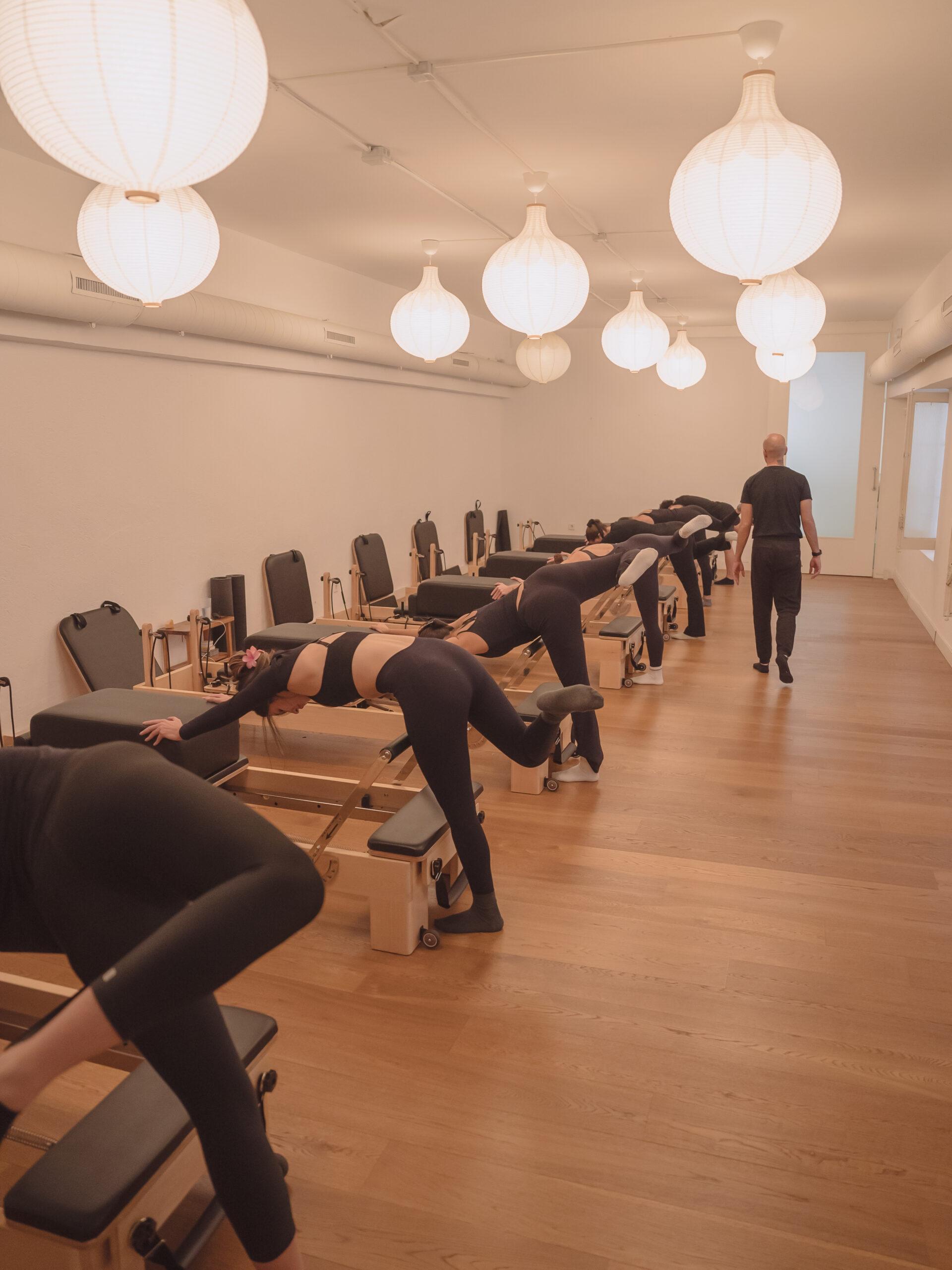
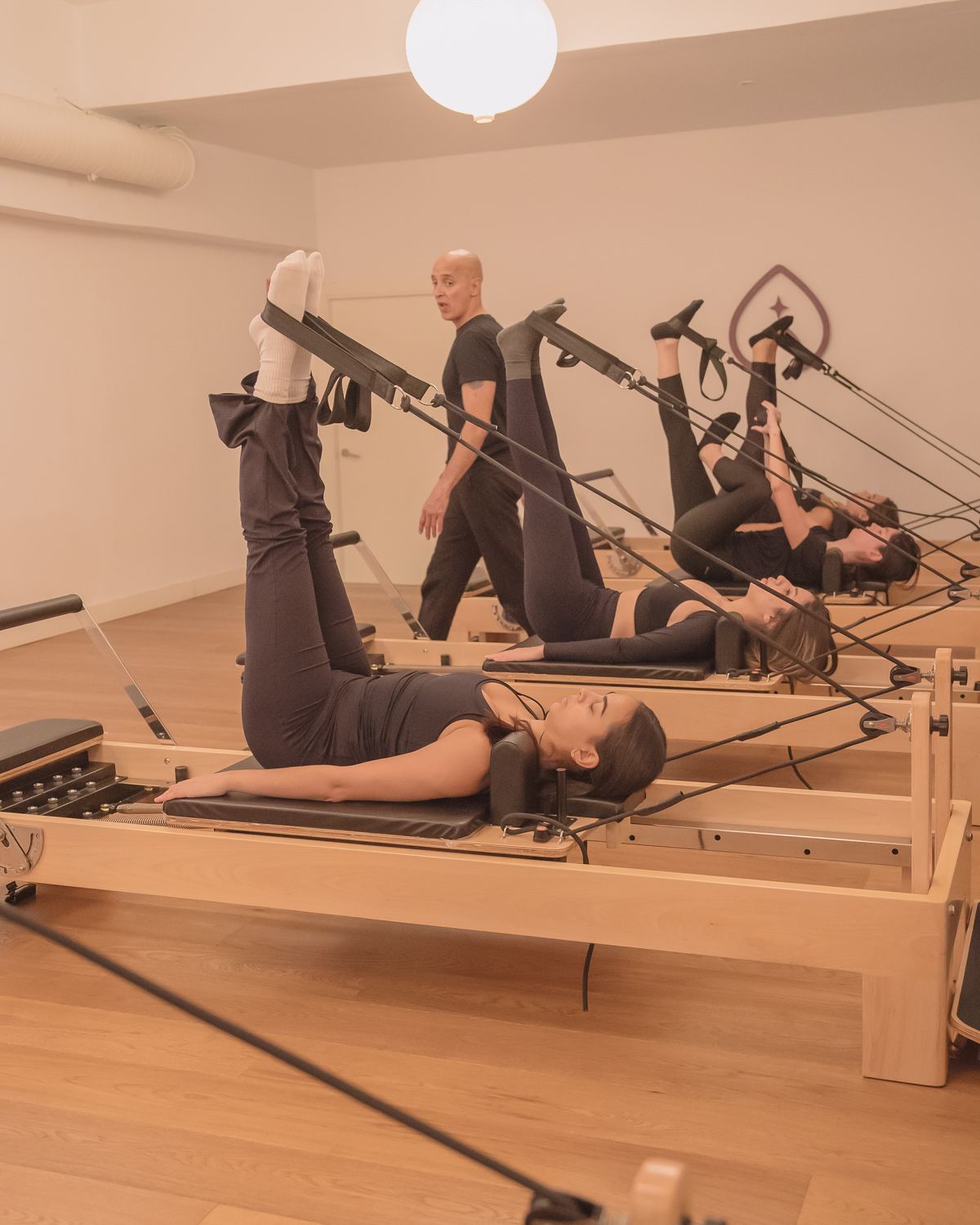
At Pinar Pilates, in the Salamanca district, we work in groups of 8 people maximum, which lets our instructors adapt every exercise to your specific situation. Because postnatal recovery does not allow for generic classes.
When to Start Pilates After Giving Birth
Vaginal Birth Without Complications
The American College of Obstetricians and Gynecologists (ACOG) states that women with an uncomplicated pregnancy and vaginal birth can start gentle exercise a few days after giving birth, when they feel ready. In practice, most professionals recommend waiting for the 6-week check-up with your gynaecologist or midwife to be cleared and confirm that recovery is going well.
This does not mean you cannot do anything during those first weeks. Gentle pelvic floor activation exercises (Kegels) and diaphragmatic breathing can start a few days after birth and are the foundation of everything that comes next. But work on the Reformer requires the tissues to have completed the initial healing phase.
Caesarean
If you have had a caesarean, the situation is different. A caesarean is major abdominal surgery that affects several layers of tissue, including the fascia of the rectus abdominis. Complete healing of these tissues takes longer. The general recommendation is to wait 8 to 12 weeks, always with explicit medical clearance.
In the first weeks after a caesarean, the priority is healing of the wound, gentle mobilisation (walking) and diaphragmatic breathing. Pelvic floor exercises are also important, since pregnancy alone has already put significant load on the pelvic floor, even without a vaginal birth.
Assisted Delivery or Complications
If your birth was assisted (forceps, ventouse), you had a grade III or IV tear, or there were complications such as postpartum haemorrhage or pre-eclampsia, the return to exercise requires an individual medical assessment. There is no standard timeframe. Your gynaecologist or midwife will tell you when it is safe to start.
Signs That Your Body Is Not Ready Yet
Whatever the type of birth, there are signs that indicate you need more time or an assessment before starting:
- Bleeding that increases with physical activity
- Pain in the caesarean or episiotomy scar during exercise
- A feeling of heaviness or a “bulge” in the vaginal area (possible prolapse)
- Leaking urine when coughing, sneezing or straining
- Pelvic pain that does not improve
If you experience any of these signs, consult your gynaecologist, midwife or a physiotherapist specialising in the pelvic floor before starting Pilates.
The Pelvic Floor: The Foundation of Recovery
What Happens to the Pelvic Floor During Pregnancy and Birth
The pelvic floor is a group of muscles and connective tissue that supports the bladder, the uterus and the rectum. During pregnancy, it bears the growing weight of the uterus, the baby, the placenta and the amniotic fluid. Pregnancy hormones (especially relaxin) soften the tissues to make birth easier, but they also weaken the support structure.
During a vaginal birth, the pelvic floor stretches to 300% of its original length. A study by Woodley et al. (2020) published in the Cochrane Database concluded that pelvic floor training during pregnancy and after birth reduces the risk of urinary incontinence. Women who did specific training were 30% less likely to suffer incontinence 6 months after birth.
How Reformer Pilates Works the Pelvic Floor
Pilates works the pelvic floor in an integrated way with the rest of the core. It is not only about doing isolated Kegels (squeeze and release), but about teaching the pelvic floor to activate in coordination with the transversus abdominis and the diaphragm during movement.
On the Reformer, this integration happens naturally. When you push the carriage with your feet (footwork), the pelvic floor activates to stabilise the pelvis. When you do a pelvic curl, the pelvic floor works in synergy with the glutes and the multifidus. The variable resistance of the springs lets you adjust the intensity so that activation is progressive and does not create excessive pressure on tissues that are still recovering.
A study published in the International Journal of Environmental Research and Public Health (Rodríguez-Díaz et al., 2021) analysed the effects of Pilates on pelvic floor injuries associated with pregnancy and birth. The results indicated that women who practised Pilates showed better pelvic floor function and a lower incidence of perineal trauma.
Diastasis Recti: Closing the Gap
What Diastasis Recti Is
Diastasis recti is the separation of the two rectus abdominis muscles along the linea alba (the central line of the abdomen). It happens in practically every woman during the third trimester of pregnancy: the uterus needs space and the rectus muscles separate to give it. In most cases, this separation reduces spontaneously during the first 8 weeks after birth. But in a significant percentage of women (between 33% and 60% depending on the study), the diastasis persists beyond that window.
A diastasis that does not resolve compromises trunk stability, contributes to low back pain, alters posture and can affect body image. It is not only an aesthetic issue. It is a functional one.
Why Classic Ab Exercises Make Diastasis Worse
One of the most common postnatal mistakes is going back to traditional ab exercises (crunches, sit-ups) thinking they will “close” the abdomen. These exercises directly increase intra-abdominal pressure, push the organs downwards and outwards, and can widen the separation instead of reducing it. The visible doming along the central line of the abdomen during these exercises is a clear sign that the pressure is excessive.
How Reformer Pilates Helps with Diastasis
The correct approach to diastasis is based on strengthening the transversus abdominis (the deepest layer of the abdominal muscles) and teaching the body to manage intra-abdominal pressure. Reformer Pilates is ideal for this for several reasons:
Transversus activation without excessive pressure. Reformer exercises are done lying down, which removes gravity from the abdominal area. Activation of the centre is worked consciously and with control, without the pressure spikes classic ab exercises create.
Measurable progression. The Reformer springs let you adjust the resistance precisely. You start with light resistance and increase it gradually as the abdominal wall recovers tone and the ability to manage pressure.
Visual and tactile control. Lying on the Reformer, both you and the instructor can watch the linea alba during the exercises. If there is doming, the intensity is reduced. If activation is correct, you progress.
A trial published in BMC Women’s Health (2023) studied the effects of Pilates in postnatal first-time mothers and showed that the Pilates programme significantly reduced the inter-rectus distance, as well as improving abdominal muscle endurance and reducing waist circumference.
Postnatal Low Back Pain: A Problem Pilates Solves
Between 50% and 80% of women experience low back pain during pregnancy, and in many it persists after birth. The causes are multiple: the postural changes of pregnancy (increased lumbar lordosis), ligament laxity from relaxin, weakening of the core and the postures adopted while breastfeeding and caring for the baby (hunching to feed, always carrying the baby on the same side).
Reformer Pilates addresses all these causes. It strengthens the deep muscles that stabilise the lumbar spine, restores mobility of the pelvis and the thoracic spine, and teaches movement patterns that protect the back during everyday activities with the baby. If you want to go deeper into this topic, we have a complete article on Pilates for low back pain in Madrid.
Safe Progression: From Zero to the Reformer
Postnatal recovery does not happen in a week or a month. It is a process that requires patience, progression and listening to your body. At Pinar Pilates, we follow a progression plan that respects each woman’s timing.
Phase 1: Reconnection (Weeks 1 to 6 Postnatal)
This phase is done at home, before joining classes. The goal is to reconnect with the deep muscles that have switched off during pregnancy and birth.
- Diaphragmatic breathing. Lying on your back with your knees bent, breathe in expanding the ribs sideways. As you breathe out, feel the abdomen draw gently in and up. This exhale activates the transversus abdominis reflexively.
- Pelvic floor activation. During the exhale, contract the pelvic floor as if you wanted to hold in urine and wind. Hold for 5 seconds. Relax completely. Repeat 10 times, 3 times a day.
- Gentle pelvic bridge. Lying on your back, feet on the floor. As you breathe out, lift the pelvis a few centimetres off the floor. Hold for 5 seconds. Lower. Repeat 10 times.
Phase 2: Basic Reformer (From 6 to 12 Weeks, with Medical Clearance)
This is where work in the studio begins. The exercises are basic, in unloaded positions (lying down), with light resistance.
- Footwork. Lying on the carriage, feet on the bar. Push out and return with control. The spine is fully supported. Strengthens legs and glutes with reflex core activation, with no pressure on the pelvic floor.
- Pelvic Curl on the Reformer. The same as the pelvic bridge, but with the moving carriage. This adds an element of instability that forces the core to activate more, but the spring resistance assists the movement.
- Leg Circles with straps. Lying on your back, feet in the straps. Gentle circles with the legs. The challenge is to keep the pelvis stable while the legs move. Works the transversus and the pelvic floor in an integrated way.
Phase 3: Intermediate Progression (From 12 to 16 Weeks)
As the muscles recover tone and coordination improves, exercises with greater stability demands are introduced.
- Modified Hundred. You start with the legs bent (table top position) instead of extended, to reduce the lever and intra-abdominal pressure. You progress according to the response of the abdominal wall.
- Scooter (kneeling). One foot on the platform, the other leg pushes the carriage back. Works the glutes, pelvic stability and core coordination in a functional position.
- Mermaid. Side stretch of the trunk against the spring resistance. Improves mobility of the thoracic spine and stretches the side muscles, which are usually shortened by breastfeeding postures.
Phase 4: Back to Normal (From 4 to 6 Months)
With the deep muscles recovered, the pelvic floor functional and the diastasis under control, you can progress to the full Reformer Pilates repertoire, always with the adaptations each body needs.
Our Students’ Experience
“Pilates has been key to my postpartum recovery. It has allowed me to reconnect with my body and strengthen my abdomen in a safe and effective way.”
Sharon B., Pinar Pilates student
What we see every week in the studio repeats itself. Women who arrive feeling disconnected from their own body and who, session by session, recover strength, control and confidence. It is not about “getting your old body back”. It is about building a stronger, more aware body than the one you had before pregnancy.
Why Pinar Pilates for Your Postnatal Recovery
Groups of 8 People Maximum
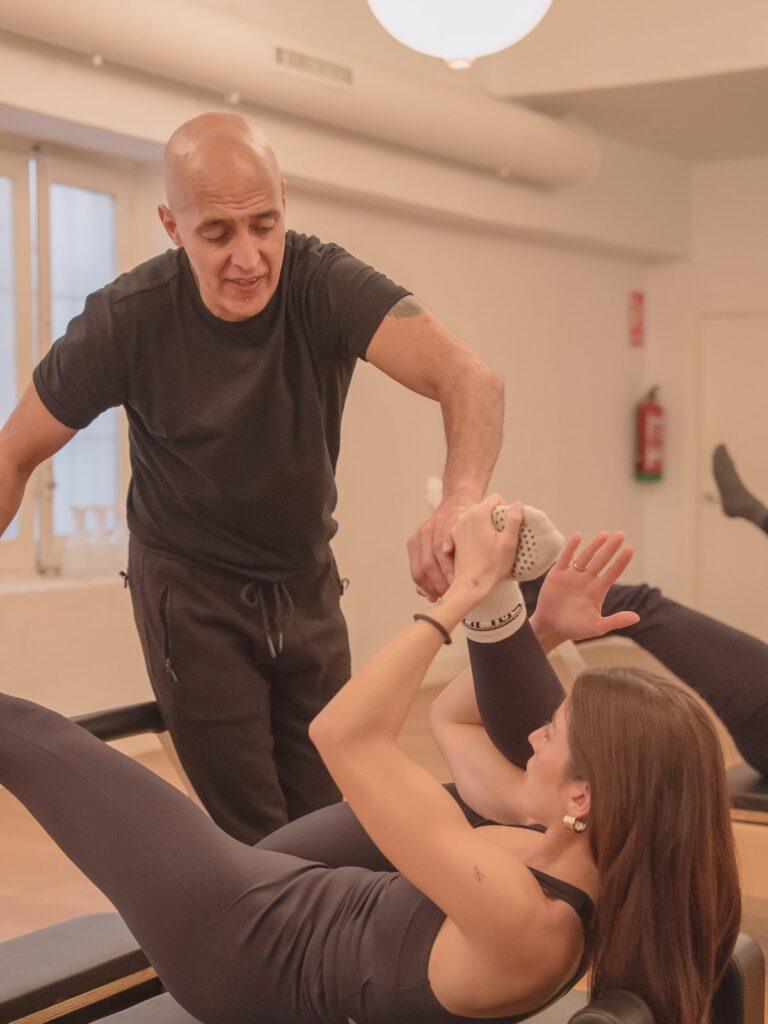
Postnatal recovery requires individual attention. In a class of 20 people, the instructor cannot check whether you are doming during an abdominal exercise, whether your pelvic floor is managing the pressure well or whether the spring resistance is right for your phase of recovery. In our groups of 8 maximum, they can. Every student receives specific corrections in every exercise.
Location in the Salamanca District
Our studio is at Calle del Pinar 8, in the heart of the Salamanca district. Easy access by public transport and with parking options nearby. Because when you have a baby, every minute counts and logistics matter.
More than 490 Google Reviews with an Average of 4.9
Our students rate us an average of 4.9 out of 5 across more than 490 Google reviews. We do not say it. They do.
Flexible Plans for Every Stage
We understand that with a baby, flexibility is key:
- 4-class plan: €100/month. To start with one session a week.
- 8-class plan: €150/month. Two sessions a week, the ideal frequency for sustained recovery.
- 12-class plan: €200/month. To progress faster when your routine allows.
- Unlimited plan: €250/month. Maximum flexibility to come whenever suits you best.
- Drop-in class: €30. To try with no commitment.
If you are pregnant and want to prepare your body for birth and the postnatal period from now, read our article on Pilates for pregnant women in Madrid.
Frequently Asked Questions
Can I bring my baby to class?
We do not offer specific classes with babies. Our sessions require concentration and precision, and the presence of babies can make the experience harder both for you and for the other students. Ideally, leave them with someone you trust for the 50 minutes the class lasts.
Do I need previous Pilates experience?
No. Many of our postnatal students are absolute beginners. The instructors adapt every exercise to your level. If you want to know what to expect, see our guide to your first Reformer Pilates class.
Is Reformer Pilates safe if I have diastasis?
Yes, as long as you work with the right modifications. The key is avoiding exercises that raise intra-abdominal pressure excessively and working transversus activation progressively. In our small groups, the instructors visually check the response of your abdominal wall during every exercise.
How many times a week should I come?
The optimum is to start with 1 to 2 sessions a week. As your body adapts and your routine allows, you can increase to 2 or 3 sessions. Consistency matters more than frequency. Two sessions a week kept up over time produce better results than four sessions one week and none the next.
When will I notice results?
Most students report improvements in their connection with the core and the pelvic floor within the first 2 to 4 weeks. Changes in strength, posture and reduced low back pain are usually evident from 6 to 8 weeks of regular practice. Full recovery of the diastasis and full pelvic floor function can take between 3 and 6 months, depending on the starting point.
Ready to reconnect with your body? Book your first class at 50% off at Pinar Pilates. If it is your first time, our instructors will guide you step by step and adapt every exercise to your situation.
Call us on +34 611 994 729 if you have questions or need advice on which plan best suits your stage of recovery.
You may also be interested in: Pilates for Pregnant Women in Madrid, Pilates for Low Back Pain and Your First Reformer Pilates Class.
Pinar Pilates · Salamanca district, Madrid
Your first reformer class, €15
Groups of 8 people maximum, specialist instructors and more than 40 classes a week. Your first class is half price.
Book my first classCalle del Pinar 8, Madrid · Questions? Message us on WhatsApp